
Short answer: grinding usually means worn rollers or bearings, squealing means something needs lubrication (or is past the point lubrication can fix), popping almost always points to the spring system or a cable, and rattling means hardware has worked itself loose. Each sound has a short list of likely causes, and a technician checks them in a specific order because the most common culprit is usually the easiest to rule out first.
Grinding: metal-on-metal that gets worse over weeks
Grinding sounds like exactly what it is — rough, scraping contact between metal parts. It typically builds gradually rather than showing up overnight, and it's often loudest right as the door starts or stops moving.
- Worn or rusted rollers. This is the first thing checked, because rollers take the most wear and Sherwood's wet winters accelerate rust on steel rollers that have lost their coating. A technician will spin each roller by hand; if it doesn't turn smoothly or shows flat spots, it needs replacing. Swapping steel rollers for sealed nylon ones (roughly $8–$20 per roller in parts) also cuts down future noise.
- Opener gear or chain wear. If rollers check out fine, the next stop is the opener itself. A stripped plastic gear inside the motor housing or a chain that's lost tension can grind as it engages.
- Bearings at the spring ends. Less common, but if grinding is coming from directly above the door near the springs rather than along the track, the end bearing plates may be worn and need replacing along with the springs.
Squealing: high-pitched and usually worse in the cold
Squealing is a friction sound, and it's often most noticeable on cold, damp mornings when metal parts haven't warmed up or moved in hours.
- Dry hardware. This is checked first because it's the cheapest fix and the most frequent cause. Hinges, rollers, and the torsion spring itself need a silicone-based garage door lubricant — not WD-40, which washes out fast in our rainy months and can actually attract grit.
- Worn rollers that lubrication won't fix anymore. If squealing comes back within days of lubricating, the rollers themselves are likely worn past the point of a quick fix and need replacing.
- Track misalignment. If one section of the door squeals at the same spot every cycle, the track may have shifted slightly — common after a hard freeze-thaw cycle or an impact — and needs realignment so the roller isn't rubbing the track wall.
Popping or banging: loud, sudden, and often at one specific point
Popping is the sound to take most seriously. It's sharp, sudden, and usually happens at one point in the door's travel rather than continuously.
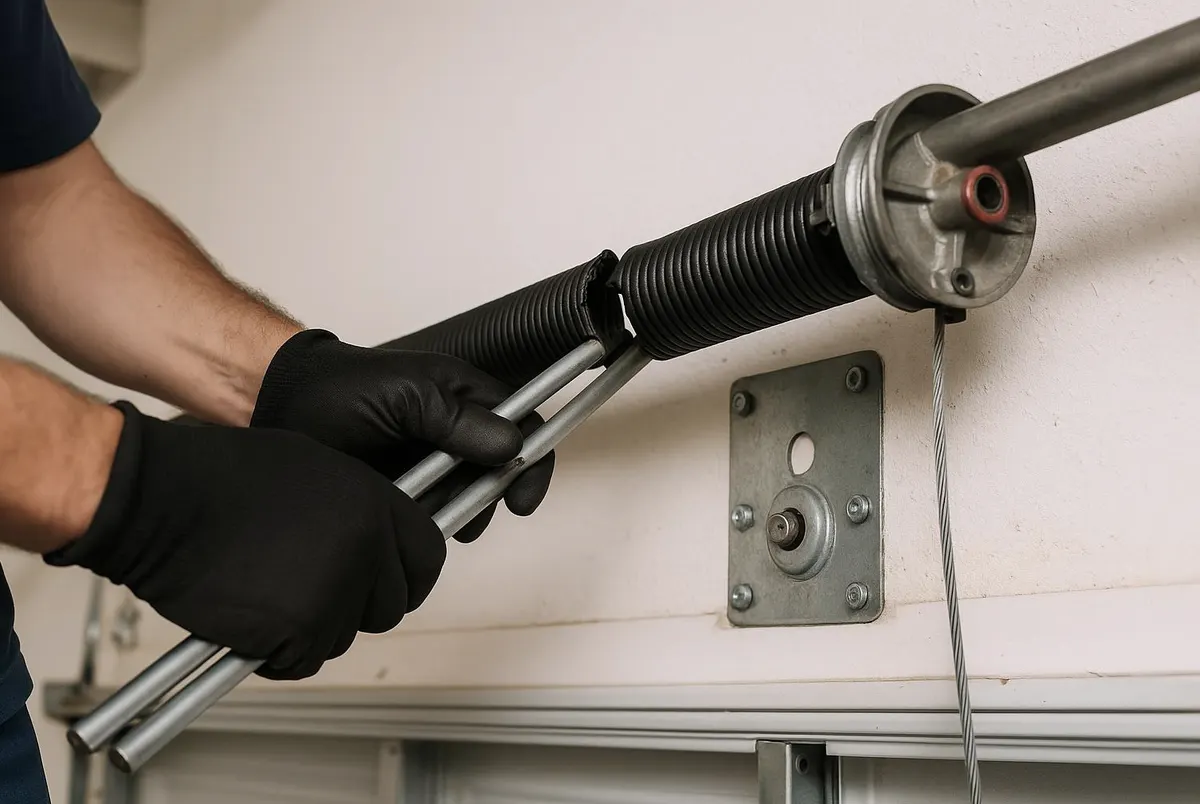
- Torsion spring stress or failure. This is checked first because it's both the most common cause of a loud pop and the most dangerous to deal with. A spring under tension that's starting to fail, or one that's already snapped, can make a bang loud enough to hear from inside the house. Torsion springs should only be replaced by someone trained to work with them — the stored tension can cause serious injury.
- A cable slipping off the drum. If the spring is intact, the next check is the cable system. A loose or frayed cable can jump its track and snap back into place with a pop, sometimes leaving the door hanging unevenly.
- Cracked hinges or a separating track section. Less common, but a hinge that's starting to crack — often from age combined with the freeze-thaw cycles and moisture we get here — can pop as it flexes under load, as can a track bracket that's worked loose from the wall.
Rattling: a looser, shakier sound through the whole cycle
Rattling is different from the other three — it's less about friction and more about parts that have come loose and are vibrating against each other, especially noticeable during wind gusts or storms.
- Loose hardware. Checked first, and often the whole fix. Track bolts, hinge screws, and the bracket mounts loosen naturally over thousands of open-close cycles. A full pass with a socket wrench over every bolt and screw is usually enough.
- Worn hinges. If tightening hardware doesn't quiet things down, hinges with elongated or worn holes let the door panels flex more than they should and need replacing.
- Slack in the opener chain or belt. A chain-drive opener with too much slack will rattle against its rail housing as the door moves; this is adjusted at the opener's tension bracket.
Why our weather makes this worse
Months of rain and damp are hard on exposed moving parts. Steel rollers and hinges rust faster without regular lubrication, wood doors can swell and shift on their tracks as they absorb moisture, and sudden temperature drops during an ice or wind storm can stress a spring that was already near the end of its life. Noises that would be minor annoyances in a drier climate tend to show up sooner and get worse faster here, which is part of why routine maintenance matters more than it might seem.
When to call Sherwood Garage Door
If you're hearing a loud pop, if the door feels uneven or heavy when lifting, or if a noise keeps coming back after you've tightened hardware and lubricated the moving parts, it's time to call. Our Spring Replacement service handles torsion and extension springs safely, with the right tools for the tension involved, and our Garage Door Maintenance service covers the roller, hinge, and lubrication checks that catch most of these noises before they turn into a stuck or broken door.
If your garage door in Sherwood, OR is making a sound you can't place, give us a call — we'll tell you exactly what it is and what it takes to fix it.